Successful collaboration doesn’t just happen in the day-to-day work of a project; it happens when people are out and about together, trying new things, and making memories.
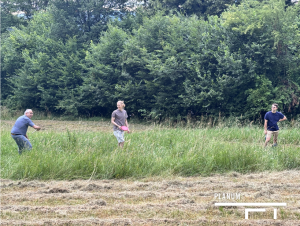
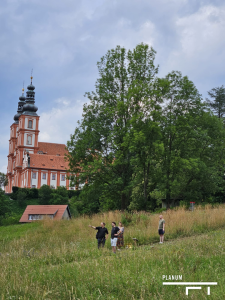
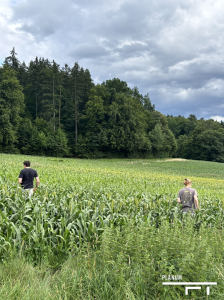
That’s exactly what we do regularly at PLANUM. Last week, we were at the disc golf course in Mariatrost and practiced throwing discs! Some of the discs ended up in the field, but we were able to find them all thanks to some real teamwork.
The day came to a wonderful close with a group dinner, good conversation, and lots of shared laughter.
We’d like to thank our team for the wonderful time we’ve spent together and the great team spirit!
At PLANUM, we use macro- and microscopic traffic models to analyze traffic flows, impacts, and opportunities resulting from changes in traffic routing. These models are particularly useful when they cover not only the immediate planning area but all of Austria or, as in our case, large parts of Europe.
At PLANUM, Patrick Stern is one of the people responsible for developing and calibrating the models, as well as implementing the necessary data. He applies the model in many projects, thereby enabling a well-founded assessment of the impacts of various measures. It was also used in the SMAC research project—which focuses on sustainable airport access—and was supplemented by additional research findings.
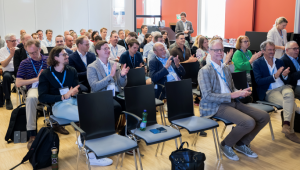
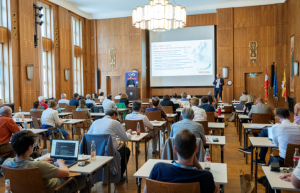
On June 18, Kurt Fallast, Managing Director of PLANUM Fallast & Partner, presented the latest findings on the spatial impacts of the new rail connection and the revised schedules as part of the ÖVG event “Transformation Through Connection – 6 Months of the Koralmbahn.” The event took place in the morning at Graz Central Station and in the afternoon at the Carinthian Chamber of Commerce in Klagenfurt. The presentation focused on the results of the recently completed AREA SÜD mobility study. The analyses show how the Koralmbahn is changing accessibility in southern Austria: Not only are Graz and Klagenfurt becoming closer in terms of travel time, but numerous rural communities are also benefiting from significantly improved connections.
Thanks to shorter public transportation travel times, workplaces, educational institutions, and recreational activities will be more quickly and easily accessible to many people. In this way, the Koralm Railway not only strengthens the connection between the two federal states of Styria and Carinthia, but also makes an important contribution to sustainable and climate-friendly mobility.
The study’s findings underscore the potential of an efficient public transportation infrastructure as a key location factor and a driver of regional development and equal opportunity—especially for people living outside urban centers.
PLANUM also benefits directly from the new connection: Since the opening of the Koralm Railway, the Klagenfurt office can be reached from the Graz headquarters in about one hour door-to-door. This has nearly cut the travel time in half compared to the previous route.
PLANUM is pleased to have been part of this event and would like to thank the other speakers from Graz—Dr. Klaus Schneider, DI Alfred Nagelschmied, and Mag. Adrian Plessin—for their valuable contributions and fascinating insights into the many facets of the Koralmbahn and its significance for the development of the southern region.
Optimal planning of traffic signal systems requires a careful balance between traffic safety and traffic flow. This involves taking into account the diverse needs of all road users and incorporating them into the planning process in accordance with their requirements.
Dipl.-Ing. Konstantin Mizera is working on this challenging task here at our firm. The FFG project “Cross Connect” was recently completed, and his expertise contributed to the creation of a step-by-step guide for the sustainable planning of traffic-light-controlled intersections. He is also currently involved in the MQG project on Fröhlichgasse in Graz, working to resolve the complex traffic situation there.
Um Ihnen ein optimales Erlebnis zu bieten, verwenden wir Technologien wie Cookies, um Geräteinformationen zu speichern und/oder darauf zuzugreifen. Wenn Sie diesen Technologien zustimmen, können wir Daten wie das Surfverhalten oder eindeutige IDs auf dieser Website verarbeiten. Wenn Sie Ihre Zustimmung nicht erteilen oder zurückziehen, können bestimmte Merkmale und Funktionen beeinträchtigt werden.
Funktionell
Immer aktiv
Die technische Speicherung oder der Zugang ist unbedingt erforderlich für den rechtmäßigen Zweck, die Nutzung eines bestimmten, vom Teilnehmer oder Nutzer ausdrücklich gewünschten Dienstes zu ermöglichen, oder für den alleinigen Zweck, die Übertragung einer Nachricht über ein elektronisches Kommunikationsnetz durchzuführen.
Preferences
The technical storage or access is necessary for the legitimate purpose of storing preferences that are not requested by the subscriber or user.
Statistik
The technical storage or access that is used exclusively for statistical purposes.Die technische Speicherung oder der Zugriff, der ausschließlich zu anonymen statistischen Zwecken verwendet wird. Ohne eine Vorladung, die freiwillige Zustimmung Ihres Internetdienstanbieters oder zusätzliche Aufzeichnungen von Dritten können die zu diesem Zweck gespeicherten oder abgerufenen Informationen allein in der Regel nicht zu Ihrer Identifizierung verwendet werden.
Marketing
Die technische Speicherung oder der Zugriff ist erforderlich, um Nutzerprofile zu erstellen, um Werbung zu versenden oder um den Nutzer auf einer Website oder über mehrere Websites hinweg zu ähnlichen Marketingzwecken zu verfolgen.