Your address will show here +12 34 56 78
General, Home, Research project

The transition to climate-neutral and liveable districts begins in good communities and their neighborhoods. This is where our FFG exploratory project “Refugium” comes in. The aim is to promote the sustainable development of church neighborhoods and to develop an innovative public-private partnership (PPP) cooperation model between the city and the Catholic Church.


Our project is already in full swing. Following our successful kick-off event in St. Hemma, we recently held the second workshop with the parish of Klagenfurt Cathedral.

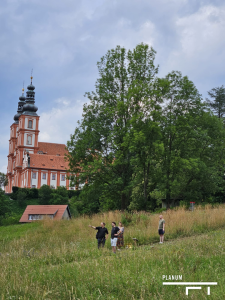
The aim was to sharpen the congregation’s previous considerations and plans and to define goals and obstacles. It was particularly important to us to look beyond the church grounds. For this reason, neighbors from the immediate vicinity were also invited.

In addition to the content, the atmosphere, in particular the view from the Franziskussaal in Klagenfurt Cathedral Parish, was a small highlight.

The “Refugium” project is divided into four central thematic blocks that are closely interlinked:

    • Energy: Efficiency and renewable energies in existing buildings.
    • Mobility: Sustainable transport concepts for neighborhood cohesion.
    • Biodiversity & climate adaptation: green oases and resilience to extreme weather.
    • Social neighborhood development: strengthening togetherness and participation.


The project began at the start of the year. Further kick-off events will follow in the coming months, in the Catholic university community in Klagenfurt and at the parish of St. Theresia. We will then move on to more concrete planning.


Our consortium is made up of IPAK (consortium management), the Carinthia University of Applied Sciences, Caritas, the Refugium association and PLANUM, thus forming an interdisciplinary team. We are very pleased about this cooperation and the energy that everyone involved brings to this project.


The FFG project is funded by the Federal Ministry for Innovation, Mobility and Infrastructure (BMIMI) and the Climate+Energy Fund.

#FFG #Research #Sustainability #Climate protection #Neighborhood development #Refugium


Queries:
Dr. Marie-Therese Fallast; mt.fallast@planum.eu
DI Katja Schmidt-Hengst; schmidt-hengst@planum.eu

0

Home, Mobility, Survey

“It was a surprisingly moving moment to be reminded of the challenges of the project and the special nature and importance of CAFT24 in the European Alpine region a good year after the end of the project” Julian Kundegraber (project manager of CAFT 24 and authorized signatory of PLANUM )

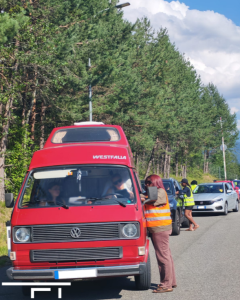
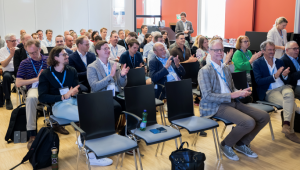
Even though the comprehensive survey on “Road-side freight transport across the Alps” was successfully completed in January 2025 , it is still to be presented at the Mobility Conference 2026 was once again singled out for special praise by the client BMIMI.

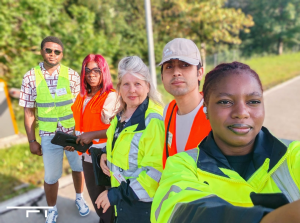
Lucas Hübner-Weiss, representing AustriaTech, provided detailed insights into the survey, in which more than 56,000 interviews were conducted at a total of 17 cross-sections throughout Austria.

We are delighted that the success of the survey has once again been made visible and especially about the interest and feedback at the conference.

0

Home, Research project

This week PLANUM was represented as consortium leader with the FFG project ViMoPlan at the KNS networking workshop on technologies and innovations for the climate-neutral city, DUT projects and mobility projects of the BMIMI and the Climate and Energy Fund.

Benedict Winkler (Project Manager ViMoPlan) presented the research project on “Integrated modeling and evaluation of mobility measures for strategic planning processes for Villach” and also came into contact with many other researchers on neighbourhood development projects.

This made the workshop particularly exciting:

  • The interesting mix of projects presented

  • Different approaches to topics from different disciplines

  • Interdisciplinary discussions and valuable knowledge transfer

  • Exchange in Discovery Walks of the project posters with other neighborhood development projects


We are delighted to have been part of this network and will continue to follow the developments of the other projects with great interest.


Our project consortium consists of the City of Villach, JOANNEUM RESEARCH, the BERNARD Group, VKFG Villacher Klimafit GmbH and PLANUM

The project and the workshop are funded by the Climate+Energy Fund, the Federal Ministry for Innovation, Mobility and Infrastructure (BMIMI) and the “Climate Neutral City” initiative

Queries: Benedict Winkler; winkler@planum.eu


0

Home, Mobility
Last year, PLANUM drew up a local pedestrian traffic concept for the market town of Passail in the district of Weiz. In close cooperation with various interest groups, workshops and surveys were organized to identify the relevant fields of action. In line with the fields of action, a package of measures was developed to make pedestrian traffic in Passail safer and more attractive and to improve the quality of life and everyday mobility in the long term.

We are delighted that this exciting planning process was successfully completed at the beginning of the year.

Queries:
Anna-Sophie Klamminger, klamminger@planum.eu
0

Home, Survey
An important part of traffic planning is the measurement and simulation of traffic noise (road, rail and aircraft noise).

Our sound engineering expert, Moritz Langbauer (see cover picture), therefore looks at the effects of new railroad lines and evaluates whether the noise protection measures implemented are sufficient for the surrounding residential buildings.

Noise measurements and accompanying traffic counts were also carried out along the B320 at various property boundaries throughout the day in order to evaluate whether and which noise protection measures are required due to the vehicle noise. The basis for the assessment of the noise situation are measured and calculated sound pressure levels in the existing situation and for the forecast period.

0

Home
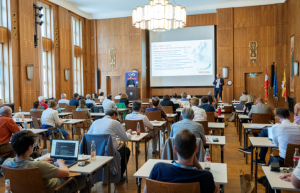
PLANUM was also represented at the ÖVG event “Smart plans & smart strategies – mobility turnaround in municipalities” in Vienna last week.

Our expert for VLSA and traffic calming Konstantin Mizera gave an inspiring presentation on the introduction of 30 km/h zones and their contribution to road safety. Representing Department 9 of the Office of the Carinthian Provincial Government, we were able to show that although the 35th amendment to the Austrian Road Traffic Act (StVO) of July 1, 2024 opens up new opportunities for 30 km/h speed zones, successful implementation on the ground requires additional support and clear framework conditions from the province. Practical examples from Styria and Carinthia show how 30 km/h and other traffic-calming measures on provincial roads contribute to greater road safety and quality of life.

In the subsequent discussion with Elisabeth Blanik (Mayor of Lienz) and Thomas Fischer (Graz Road Authority), the different perspectives of the municipalities were presented.

Contact person:
Konstantin Mizera, mizera@planum.eu
0

Home, Mobility, Research project

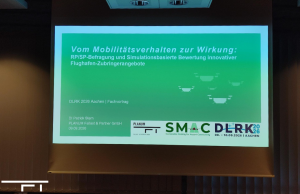
We are in the midst of our SMAC (Sustainable Mobility for Airport Connectivity) research project to design and evaluate new transportation solutions for the pre- and post-carriage of long-haul flights.

At the last meeting, we conducted a “practical experiment” at the AIT – Center for Technology Experience: the team put on VR goggles and tested a realistic air cab simulator. During a virtual flight from Vienna Airport to the UNO City, we were not only able to test various scenarios, but above all to feel how the journey feels for the user.


What we have learned:

  • The immersive experience strengthens confidence in new forms of transportation.

  • The perception of safety and comfort can already be optimized in the simulation phase.

We are entering the next phase of the project with valuable insights, in which we will integrate the transportation solutions we have designed into a traffic model in order to simulate various scenarios for the overall transport system.


We are pleased about the good cooperation with:
Austrian Institute of Technology GmbH (AIT)
FH Joanneum
and BRIMATECH Services GmbH

Queries:
Patrick Stern, stern@planum.eu

0

Home, Mobility, Survey

“The residential area between Münzgrabenstraße, St.-Peter-Hauptstraße, Brucknerstraße, Petrifelderstraße, Karl-Huber-Gasse and Liebenauer Tangente still has an increased volume of motorized individual traffic (MIV) despite some traffic calming measures, such as the bicycle lane in Marburger Straße and the drive-through barrier. Furthermore, several urban development projects are expected in the area’s immediate vicinity in the future, which could have an impact on traffic in the Harmsdorf-ORF district.” [© 2026 City of Graz]


Last year, work began on developing a traffic concept for the Harmsdorf – ORF quarter residential area, including two surveys. PLANUM was represented in the project team during this process to provide technical support. In addition to consultations and the development of possible variants, PLANUM also carried out the traffic counts and the modeling of the different variants in the area. PLANUM was also represented at the two planning exhibitions in mid-January 2026 to provide information on the traffic-related background.

We are delighted to have been involved in this exciting project!
You can find more information about the project on the website of the City of Graz: Traffic calming Harmsdorf-ORF-Viertel – City portal of the City of Graz


Queries:
Patrick Stern, stern@planum.eu
0