General, Home
We would like to congratulate our authorized signatory Julian Kundegraber on passing his entrepreneur exam with distinction!
0

At the Mobility Conference 2026 of the Federal Ministry for Innovation, Mobility and Infrastructure in Vienna, PLANUM presented the passenger transport model to the specialist community for the first time. A separate block was dedicated to the entire complex and long-standing project, the Austrian transport model.
Our project managers DI Alexander Schaffenberger and DI Patrick Stern presented the Austrian transport model together with the other partners Gerard de Jong and Stefan Grebe from the Netherlands and Dirk Linder from SSP Consult. For PLANUM, the focus was on the passenger transport model and the allocation to the transport services.
The transport model was THE central topic of discussion at the conference and attracted a great deal of interest. There were many requests to speak during the discussion round and the feedback option at the end of the presentation was also used intensively.
We are very pleased that it has paid off to be a strong and reliable partner to our clients BMIMI, ASFINAG and ÖBB over many years and look forward to the next exciting tasks, which we will be able to report on again at the Mobility Conference 2027.
The transition to climate-neutral and liveable districts begins in good communities and their neighborhoods. This is where our FFG exploratory project “Refugium” comes in. The aim is to promote the sustainable development of church neighborhoods and to develop an innovative public-private partnership (PPP) cooperation model between the city and the Catholic Church.
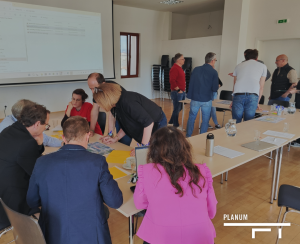
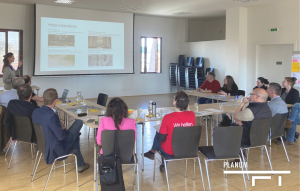
Our project is already in full swing. Following our successful kick-off event in St. Hemma, we recently held the second workshop with the parish of Klagenfurt Cathedral.
The aim was to sharpen the congregation’s previous considerations and plans and to define goals and obstacles. It was particularly important to us to look beyond the church grounds. For this reason, neighbors from the immediate vicinity were also invited.
In addition to the content, the atmosphere, in particular the view from the Franziskussaal in Klagenfurt Cathedral Parish, was a small highlight.
The “Refugium” project is divided into four central thematic blocks that are closely interlinked:
The project began at the start of the year. Further kick-off events will follow in the coming months, in the Catholic university community in Klagenfurt and at the parish of St. Theresia. We will then move on to more concrete planning.
Our consortium is made up of IPAK (consortium management), the Carinthia University of Applied Sciences, Caritas, the Refugium association and PLANUM, thus forming an interdisciplinary team. We are very pleased about this cooperation and the energy that everyone involved brings to this project.
The FFG project is funded by the Federal Ministry for Innovation, Mobility and Infrastructure (BMIMI) and the Climate+Energy Fund.
#FFG #Research #Sustainability #Climate protection #Neighborhood development #Refugium
Queries:
Dr. Marie-Therese Fallast; mt.fallast@planum.eu
DI Katja Schmidt-Hengst; schmidt-hengst@planum.eu

