The Koralm Railway will soon go into operation – a milestone that we at PLANUM are eagerly awaiting. We have been part of this extraordinary project since the very first feasibility study. At the start of the final phase, we would like to take the opportunity to show how PLANUM and IBV-Fallast have accompanied and helped shape the Koralm Railway over the years.
🔎 We are currently working on the AreaSouth mobility study, which will provide important impetus for future developments. We will be able to share further exciting insights with you at the beginning of next year.
PLANUM has been supporting the Koralm Railway for more than two decades
ÖVG’s exclusive excursion in June 2025 gave us the rare opportunity to take a special trip on the Graz – St. Paul – Graz route and experience the Koralm Tunnel up close. The stop at the evacuation and rescue position in the middle of the Koralm Tunnel showed us the impressive safety precautions in place.
The management and employees are delighted – our locations in Graz and Klagenfurt will soon be just 50 minutes apart. The Koralm Railway, one of Austria’s largest infrastructure projects, will permanently change mobility in the south of the country.
PLANUM is proud to have made a significant contribution to the planning of this project of the century since 1998. Our team was able to contribute extensive expertise, particularly in the area of noise studies. We also carried out risk analyses for the temporary routing of Koralm railway traffic via the southern line (Feldkirchen-Werndorf section).
PLANUM also supported the route selection process – from the definition of the planning corridor to the optimal route variant between Werndorf and the provincial border – as well as the preparation of the environmental impact statements (EIS) for several sections.
The focal points of our planning work were:
Spatial development, transport and infrastructure
Noise and local spatial planning
Townscape, material and cultural assets
Leisure, recreation and tourism
PLANUM also took on public relations tasks to accompany the EIA process.
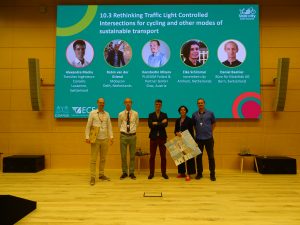
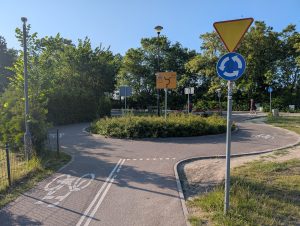
PLANUM was also present at the Velo-City Conference in Gdańsk . Represented by Konstantin Mizera, experiences from cities around the world were gathered for future bicycle traffic planning. In addition to the joy of the local bike sharing offer, which, among other things, took him comfortably through the cycle traffic circle of Gdańsk, a special highlight was the appearance with research partners from Switzerland, the Netherlands and Germany.
In an interactive two-way track debate, the question was posed: “Which redesign variant of a junction would you choose – project A or project B?” Two different concepts were presented, in which the following had to be weighed up: Public transport or cycling prioritization? Separate cycle paths or cycle lanes? Traffic lights or priority crosswalks?
In a stimulating and exciting discussion, we debated the advantages and disadvantages of the two concepts, in which the audience was also allowed to choose a variant. Opinions were changed in the course of the presentation and there was a need for discussion beyond the presentation itself.
The Two-way Track Debate shows us how important open discussions and a change of perspective are in transport planning. It is a format that we would like to use more often in the future.
As part of the “Corporate Mobility” working group of the Austrian Society of Transport Sciences (ÖVG), a position paper was drawn up that outlines concrete measures for the challenges of corporate mobility. This paper will be submitted to the government and other relevant stakeholders.
Eight key recommendations for action were formulated to make company mobility more sustainable and fit for the future:
Tax-free mobility budgets
Reform of commuter allowance
Accessibility and parking space obligation
Mandatory mobility management
Strengthening car pools
Extension job bike models
Availability of e-charging infrastructure
Raising awareness
The “Accessibility & parking space obligation” chapter was created with the expertise of PLANUM Fallast & Partner over the course of several meetings. In this way, we are committed to future-oriented corporate mobility. With the expectation that these recommendations will be implemented and thus contribute to achieving the climate targets and strengthening the attractiveness of Austria as a business location.
Um Ihnen ein optimales Erlebnis zu bieten, verwenden wir Technologien wie Cookies, um Geräteinformationen zu speichern und/oder darauf zuzugreifen. Wenn Sie diesen Technologien zustimmen, können wir Daten wie das Surfverhalten oder eindeutige IDs auf dieser Website verarbeiten. Wenn Sie Ihre Zustimmung nicht erteilen oder zurückziehen, können bestimmte Merkmale und Funktionen beeinträchtigt werden.
Funktionell
Immer aktiv
Die technische Speicherung oder der Zugang ist unbedingt erforderlich für den rechtmäßigen Zweck, die Nutzung eines bestimmten, vom Teilnehmer oder Nutzer ausdrücklich gewünschten Dienstes zu ermöglichen, oder für den alleinigen Zweck, die Übertragung einer Nachricht über ein elektronisches Kommunikationsnetz durchzuführen.
Preferences
The technical storage or access is necessary for the legitimate purpose of storing preferences that are not requested by the subscriber or user.
Statistik
The technical storage or access that is used exclusively for statistical purposes.Die technische Speicherung oder der Zugriff, der ausschließlich zu anonymen statistischen Zwecken verwendet wird. Ohne eine Vorladung, die freiwillige Zustimmung Ihres Internetdienstanbieters oder zusätzliche Aufzeichnungen von Dritten können die zu diesem Zweck gespeicherten oder abgerufenen Informationen allein in der Regel nicht zu Ihrer Identifizierung verwendet werden.
Marketing
Die technische Speicherung oder der Zugriff ist erforderlich, um Nutzerprofile zu erstellen, um Werbung zu versenden oder um den Nutzer auf einer Website oder über mehrere Websites hinweg zu ähnlichen Marketingzwecken zu verfolgen.